


‘I make £100k a year selling homes – £70k more than a high street estate agent’
‘I make £100k a year selling homes – £70k more than a high street estate agent’

MaryLou CostaSun, November 15, 2026 at 10:00 AM UTC
0
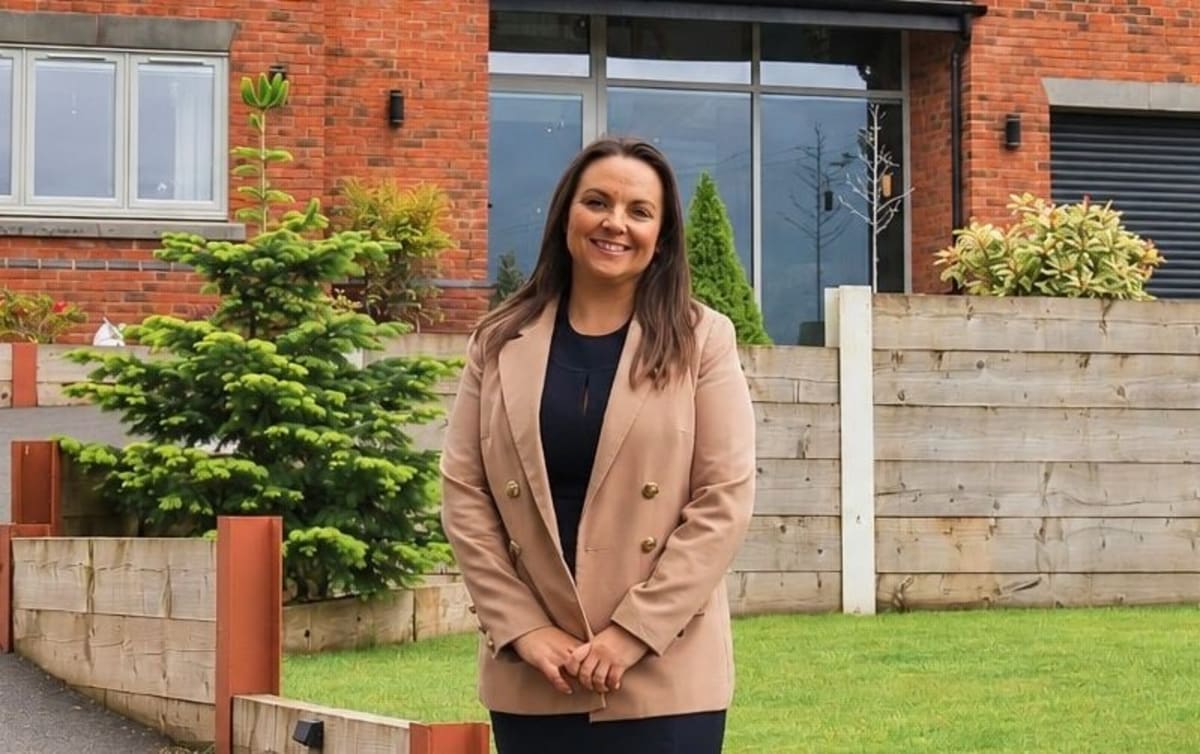
Nicole Beales, a self-employed agent, says she would never have earned so much at a traditional agency
October was a good month for estate agent Nicole Beales. She had seven offers come in on properties she was selling, three of which had been accepted when she spoke to The Telegraph.
Her commissions should all make for a decent Christmas bonus. While she technically works for the Hortons estate agents brand, Beales, 43, works on a self-employed basis.
She pockets 75pc of the commission she generates. The rest goes to Hortons, which provides the required sales software, promotional materials, customer leads, and operational support from their Leicester office.
Thanks to this model, Beales is set to make £100,000 this year, and hopes to reach £120,000 next year.
Beales’s earnings were a fraction of this when she started her real estate career in 2018, working at a local high street estate agent. She made around £30,000 a year, including a basic salary and commission, and worked up to 70 hours a week, “going 100 miles an hour”.
“I would never in a million years have been able to achieve this kind of money in a high street agency, no matter how much commission I was earning,” says Beales, who lives in Derbyshire.
Beales is among a growing number of agents in the UK who, inspired by the American model for selling homes, are using hyper-local knowledge and social media profiles to strike out on their own – and are seeing their earnings potential skyrocket.
10 times more commission
Beales began working for Hortons in 2022 after a recruiter mentioned the possibility of leaving the high street agency where she worked and becoming self-employed.
“Even though I’d worked my way up to being a manager and overseeing branches, I ended up feeling like I needed to get out of it,” she says.
Adam Horton, who started the business in 2013 also after a career in high street estate agents, converted it to a self-employed brokerage-style model in 2016. Horton was inspired by how property business is done in the US, with agencies contracting independent brokers.
Some 86pc of US real estate agents licensed through the country’s National Association of Realtors are independent contractors.
In the UK, it’s estimated to be just under 3pc, according to data from property market data firm TwentyEA.
But the number is steadily growing: Hortons now has around 48 self-employed agents, each operating in exclusive territories. Rival Yopa has around 200, while eXp now has around 1,000.
Self-employed agents are also more likely to sell, with lower completion times and fall-through rates, according to TwentyEA. Hortons advertises that homeowners will have a dedicated local expert, will not be passed around a team or a call centre, and there will be “no lengthy tie-ins and no withdrawal fees”.
Yet if Horton is giving 75pc of commission away to his self-employed agents – 10 times more than what he says is the maximum high street commission – how is he making any money?
The answer is as simple as the model itself. He has no expensive high street rents to pay – each of his agents works remotely.
Horton does not pay any salary costs, meaning agents work on commission only. He isn’t liable then for a hefty National Insurance or staff pension bill. Nor is annual leave – or any personal leave – his responsibility.
He does, however, have a small central staff that is employed.

Adam Horton, who founded the brokerage, allows self-employed agents to keep 75pc of the commission
“The only factor that we’ve got to consider in terms of how we expand is finding the right people. But other than that, it’s incredibly low-risk because if an area doesn’t work, our costs are down to a software subscription and ‘for sale’ boards,” says Horton.
Advertisement
“Yes, we’re giving away 75pc, but each one of these agents would, on average, produce anything from £25,000 to £50,000 per year in income for us centrally. We can expand across the country and become extremely profitable.”
For homeowners selling with Hortons, there is a £50 admin fee, plus marketing fees that start sat £170 for professional photography of the property, going up to £300 if it includes a presenter-led video tour. The commission rate is usually between 1pc to 1.5pc of the selling price, which is similar to a high street agent.
‘Sweet competition’
Yet for the agents, it’s not without risk. Beales says she worked numerous side jobs for several months until her first sales with Hortons came through: starting her day early as a carer for the elderly, helping at her sister’s horse yard, and working evenings at a bar.
You also need to have enough of a financial cushion to get through a downturn without the buffer of a stable income and employee benefits. Deals that you’ve worked on for weeks, says Beales, can fall through in a day.
Josephine Dayan, in London, is getting by on only four or five viewings a week, when she’s been used to attracting more than 30 as a self-employed agent with estate agency eXp.
“It started very well until we had a Labour government,” says Dayan, 57. “I have plenty of properties, but buyers are very reluctant.
“They’ve made it very hard for landlords, so everybody is selling, and I know people selling for a loss who still can’t sell. It’s mentally draining at times, and you need to keep motivating yourself to carry on.”
Like Beales, Dayan began her property career as a high street estate agent. She started in 2017, earning a basic salary of £18,000 plus a maximum of 15pc in commissions, despite often working 12-hour days.
Now, she takes between 60pc and 80pc commission. Like Hortons, eXp provides the relevant software, marketing materials and customer leads. But a big difference is in the exclusivity of territories – with eXp, another self-employed agent with the company can set up shop right on your turf.
“Because the model has been so successful, we now have so much competition, with other models and within ourselves,” says Dayan.
“But if the other agent wasn’t an eXp agent, it would probably be another company’s agent. So, I don’t really mind any more. It means I have a colleague who could do my viewings if I can’t go, and if they can’t, I can do theirs, and we work out the fee. I call it sweet competition.”
The heightened competition is also rocking the high street stalwarts. Jo Eccles, of London buying agency Eccord, says: “We used to speak to around 25 to 30 agents for each area, but across Knightsbridge, Chelsea and Kensington, we now speak to 136 different sales agents and brokers.”
Influencers grab a share
The steady growth of self-employed agents is not only creating a new era of competition, but a new culture of “agentfluencers”, as Philip Harvey, of London buying agency Property Vision, observes.
A study by Lloyds has found that TikTok has become the go-to source of information for three in 10 young buyers looking for their first property.
But Harvey isn’t convinced. “The internet initially strengthened traditional agencies, but it is now spawning a growing number of competitors and alternative routes to market. In some cases, a drone, 100,000 followers and an engaging smile can be enough to build a property brand, despite little or no estate agency experience,” he says.
He also says influencers are prone to “piggybacking” existing listings marketed by other agents, taking a share of the fee if they introduce the eventual buyer. “While that can broaden exposure, it adds another layer of complexity to an already crowded marketplace,” he says.
Social media has certainly been key for Beales and Dayan, making connections via Instagram, TikTok and LinkedIn. But they argue their success is down to the trusted reputations they have built locally, as they both receive many word-of-mouth referrals.
Beales says she goes above and beyond in ways she couldn’t – or wouldn’t – do if she were still working in a high street estate agency.
“I had an 87-year-old client with no family who was going into a warden-controlled bungalow, and we sold her home. I was with her probably twice a week in the evening, printing all the paperwork off for her because the solicitors weren’t really helping her go through things,” says Beales.
“We both cried on completion day, and I just thought: ‘This is why I do what I do’.”
Source: “AOL Money”
