


If not even Mercedes wants to invest in Germany, who will?
If not even Mercedes wants to invest in Germany, who will?

Matthew LynnSun, November 15, 2026 at 11:00 AM UTC
0
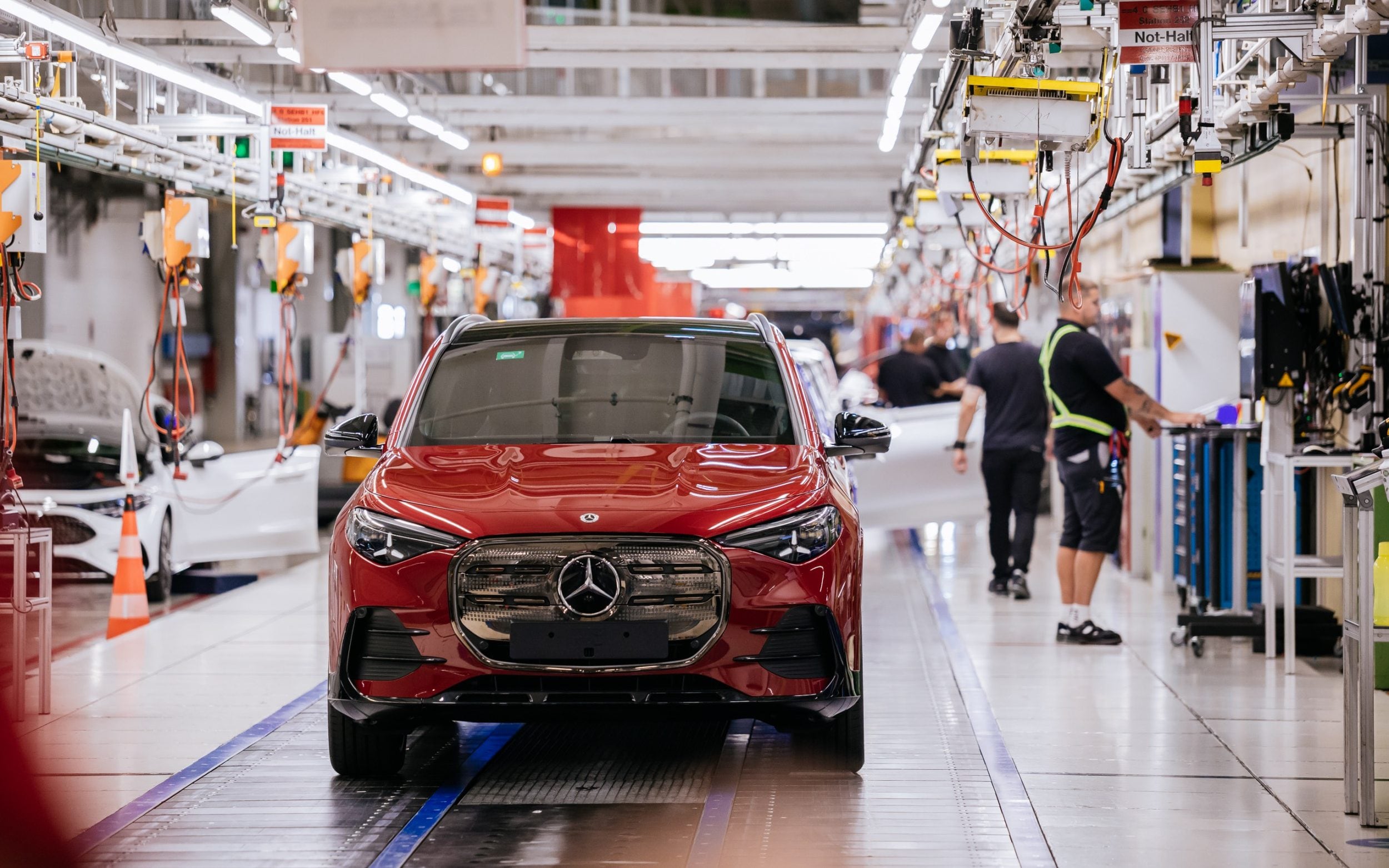
Germany has lots of great companies, but none has quite the symbolism of Mercedes - Getty Images/Thomas Niedermueller
With its sleek, perfectly engineered, luxurious cars, it is hard to think of any company that has, over the last few decades, been more emblematic of the German economic machine than Mercedes-Benz. It encapsulated everything that Germany did well, while its exports powered the country’s prosperity.
And yet last week it made the dramatic announcement that it could no longer invest in Germany. Costs are too high, and the returns are not good enough. That should be the final wake-up call for the dramatic reforms the economy now needs – because if even Mercedes does not want to invest in Germany, then who does?
Germany has lots of great companies, or at least it used to. But none had quite the symbolism of Mercedes. Anywhere you went in the world, it was the limousine of choice for ministers and tycoons. It was immortalised in songs and books, while its three-pointed symbol was turned into a medallion by hip hop stars such as Ice T. Mercedes equalled German engineering and efficiency at its very best. It was one of the best brands in the world, and one closely identified with its home country.
No longer, it seems. On Thursday, the company pulled the plug on Germany. “The executive board has jointly decided to halt all further investments in German sites,” stated Michael Schiebe, the company’s production chief, bluntly in a memo that leaked to the press. Even worse, it is looking at plant closures. The company would still be able to invest, but not in its country of origin.
The immediate reason for cancelling all further investment is that it has been unable to agree on a programme of cost reductions with its works council and its unions. Like all the German auto manufacturers, Mercedes is struggling with sky-high energy costs, the transition to electric vehicles, competition from China and now with the imposition of tariffs on imported cars into the critical US market. Add it all up, and it is becoming impossible to make money by manufacturing in Germany.
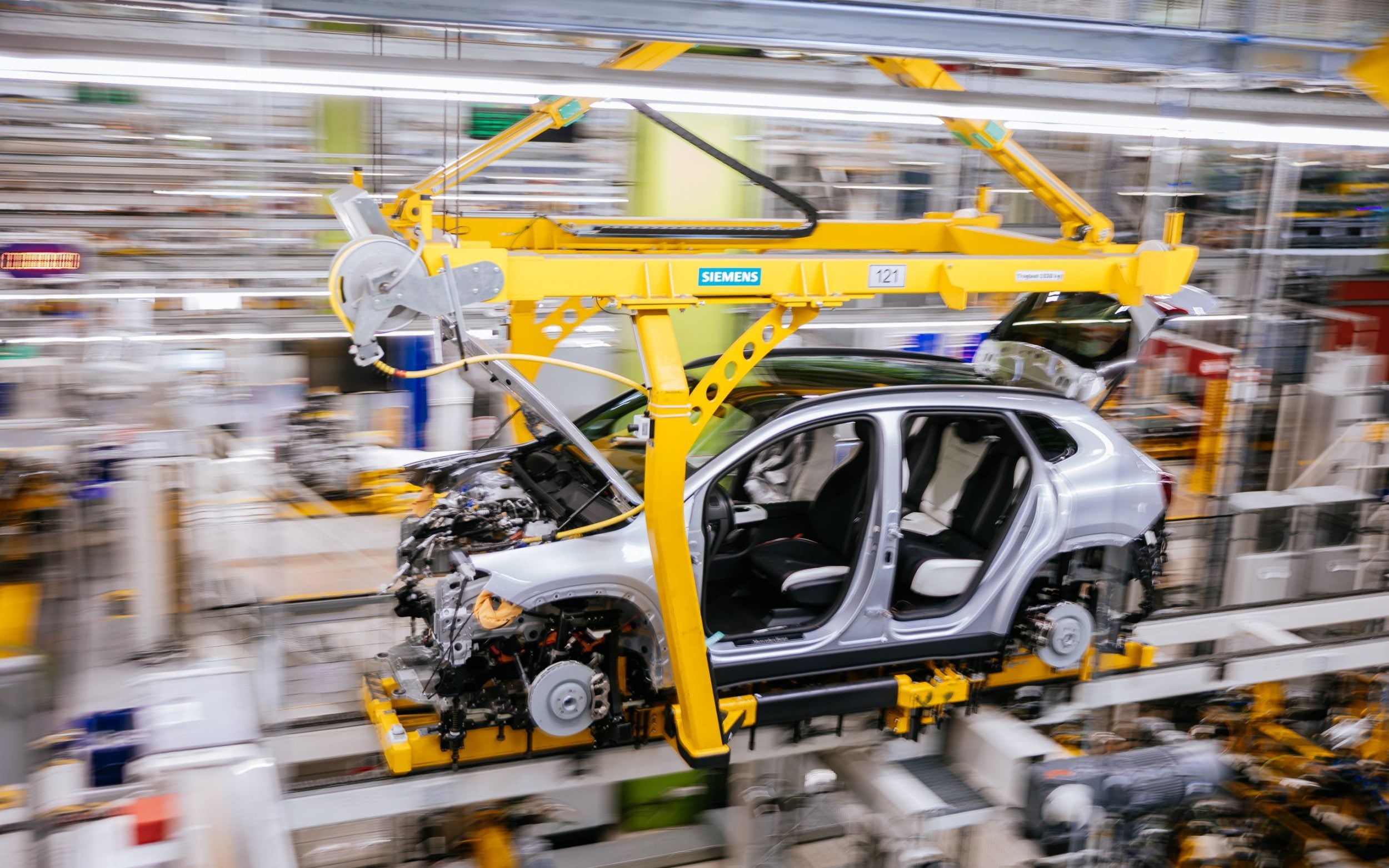
Mercedes is struggling with energy costs, the transition to electric vehicles, competition from China and US tariffs - Getty Images/Thomas Niedermueller
It is far from alone. Other German companies have already started closing factories. Volkswagen has already announced plans to cut 100,000 jobs and close up to four plants, as it struggles to re-invent itself. BASF has closed a whole series of plants at its Ludwigshafen sites, once the biggest chemicals production centre in the world. Siemens is closing its Nuremberg-Moorenbrunn site. The list goes on, and each closure is dramatic in its own way. But if Mercedes joins them, then Germany’s engineering-based, export-orientated economic model is finished.
Advertisement
It is not hard to work out what has gone so badly wrong. Just like Britain, an obsession with global leadership on net zero combined with a reckless dependence on Russian gas has meant energy costs have soared out of control. In Germany, industrial energy costs up to three times that in the United States, and up to twice as much in France.
Making luxury cars requires a lot of power. Its strict labour laws mean companies don’t have the flexibility to respond to changing demand. It is stuck with lots of heavy engineering companies. That was great while China needed lots of kit to industrialise – but now it can make all that stuff itself.
Its infrastructure has been allowed to decline at an alarming rate, with the trains chaotic, and broadband speeds slow compared with the rest of the world. Chancellor Friedrich Merz keeps calling for dramatic reductions in red tape, but trapped within a fragile coalition, and dependent on the votes of the Social Democrats, there is no agreement on how to make it happen.
Germany’s economic model has to be radically reformed. Energy must be dramatically reduced in cost, even if it means rebuilding the nuclear power stations that the former chancellor Angela Merkel catastrophically closed back in 2011. The power of the unions needs to be reduced. It is hard to succeed in a tech-led entrepreneurial economy when everything has to be agreed by the works council, and every decision can be blocked because someone might be worse off. And most of all, it needs to start building new industries.
You might think that with its long traditions in precision engineering, Germany would be leading the world in AI chips, data centres, and all the kit that connects them. Forget it. The country has created virtually no tech champions of any significance, and measured by the number of “unicorns” – as start-ups worth more than $1bn (£760m) are known – it is well behind not just the United States, but also India and even Britain. It is stuck with lots of declining analogue industries in a global digital economy.
Germany’s consensual business model, with management and unions working together to achieve common goals, and with major corporations working closely with the government, may have been rightly praised during the country’s post-war heyday. It reduced conflicts and it got things done. But it is hopelessly out of date.
When German factories have to be closed and production moved elsewhere, there is no point in expecting the unions to agree to that. When fights need to be picked with the government to reduce energy costs, and strip away layers of bureaucracy, there is no point in expecting a consensus. It takes conflict, arguments and disruption. It might not be very German, but it is the only way the economy can be reinvented. When even Mercedes has decided that Germany is now uninvestable that is surely clear to everyone. It is just a shame it has taken such a dramatic decision to drive the point home.
Source: “AOL Money”
