


Our modern world of computers was brought to you by Lyons Corner Houses
Our modern world of computers was brought to you by Lyons Corner Houses

Dominic LawsonFri, November 13, 2026 at 6:00 AM UTC
0
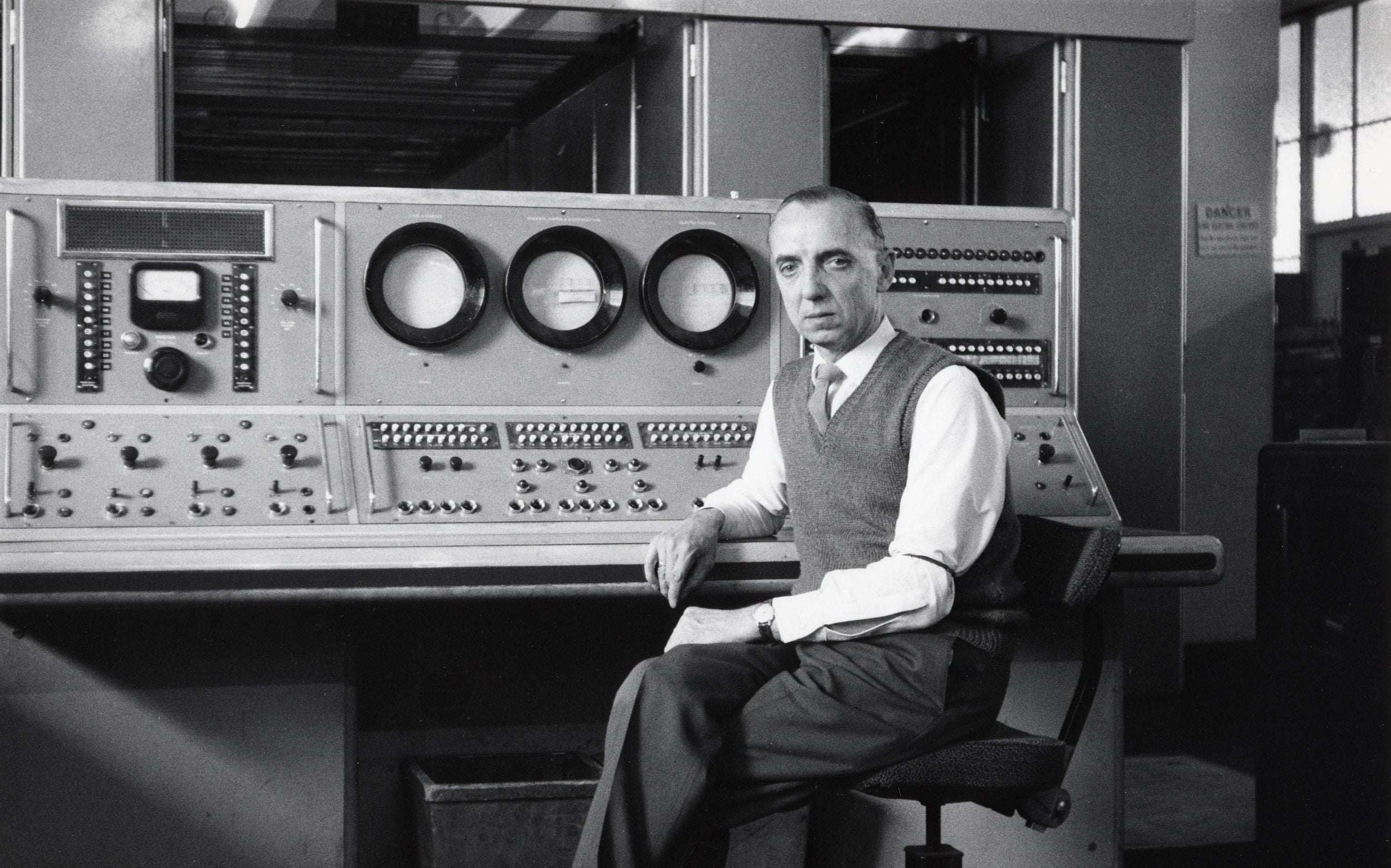
The Lyons Electronic Office II/I console in the offices of J Lyons & Company Ltd, London, 1957 - Getty Images/Science Museum/SSPL
When and where did the Third Industrial Revolution begin? Answer: 75 years ago, November 29, 1951, on Hammersmith Road in West London. This was the headquarters of what was then the world’s largest supplier of Swiss Rolls (among many other sugary delights): J Lyons & Co. And it was this firm most associated with the joys of an English tea – and not IBM, as is commonly supposed – that developed the world’s first business computer. It was called LEO – Lyons Electronic Office.
I take a personal interest because it was my mother’s family – the Salmons, and their closely interrelated cousins, the Glucksteins – who created in 1884 what became a catering empire. But as it grew, the complexity of running a sprawling food business with small profit margins, and a payroll of over 30,000 employees, became ever more challenging.
Fortunately, they had hired a man called John Simmons, with excellent contacts at Cambridge University, which had developed the Electronic Delay Storage Automatic Calculator (EDSAC). This had been designed to solve purely mathematical problems, but the visionary Simmons recognised it could be invaluable for information processing at the scale and speed required by a business such as Lyons.
He, and the board, were aware the Americans were working on something similar. But Lyons had an extraordinary culture of self-reliance. It didn’t just bake its own cakes, using eggs from its own farms; its tea for the Lyons Corner Houses came from its own plantation in what is now Malawi, it manufactured the distinctive pearl-buttoned dresses its waitresses (“Nippies”) wore; even the vehicles it used to deliver its goods around the country were, so to speak, Lyons-made.
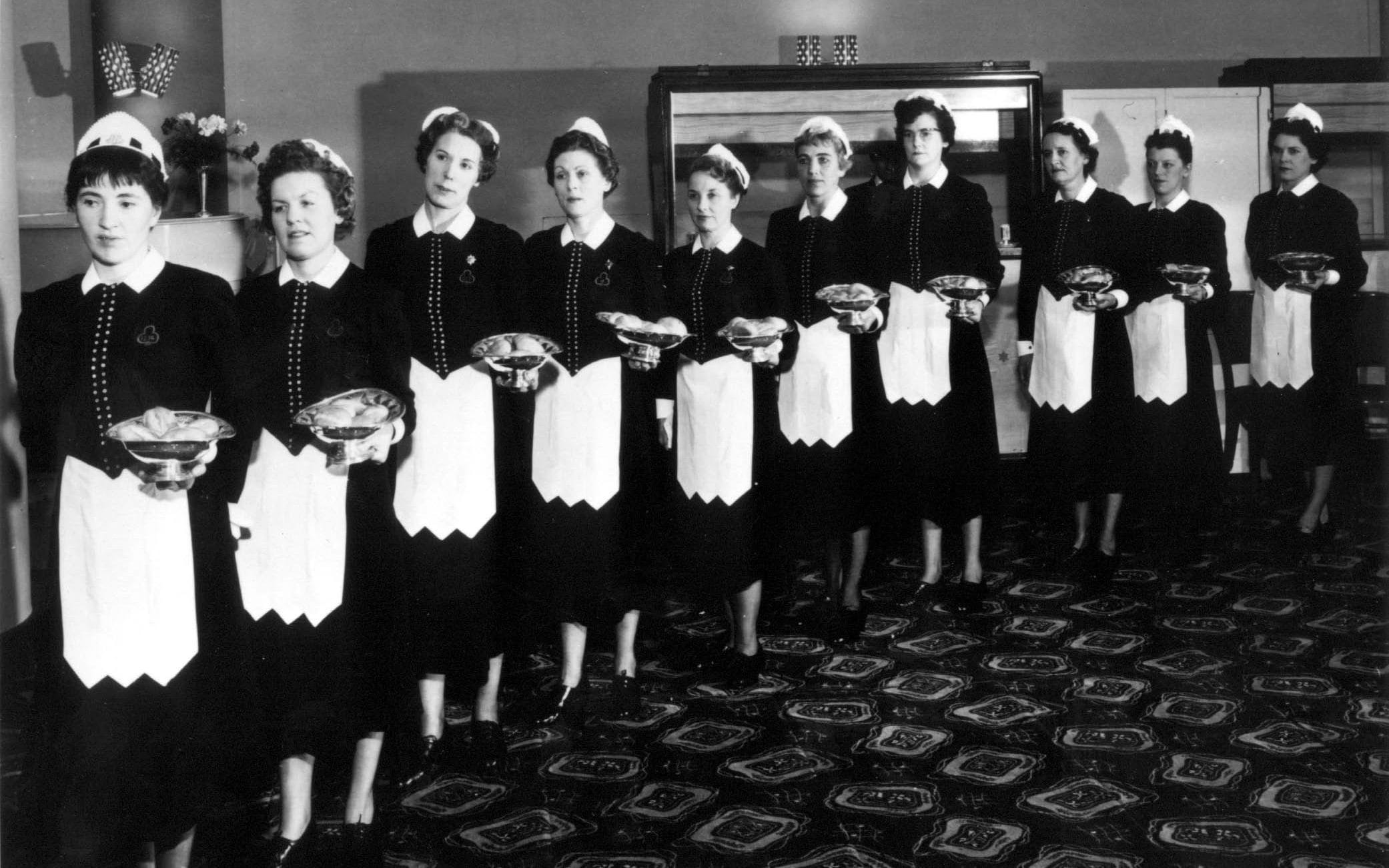
The Lyons Tea House waitresses, known as a ‘Nippies’, seen in the distinctive black and white uniform in 1930 - PA
Also highly paternalistic, the board was concerned to allay suspicion by its clerical staff that they would be made redundant by the mysterious new machine (which took one and a half seconds to calculate each employee’s appropriate pay packet, compared to the eight minutes by an experienced clerk). All the clerks were found other jobs within Lyons, not least in the new field of programming – where they would become proficient in LEO’s bespoke digital computer “language”: CLEO (Clear Language for Expressing Orders).
The very first operational use of LEO on November 29, 1951 was for the all-important “bakery run”. My grandfather Felix was the family member responsible for the tea shops: he was an immediate beneficiary of what became known as “the teashop ordering system”. As one veteran of LEO explained it to me: “Each teashop manageress telephoned the computer centre at a fixed time every day to place their orders for the following day’s business. The LEO breakthrough was using each data item to produce a whole set of different outputs to run the business – including weather forecasts.”
Although the trailblazing of Lyons in the computer age is now insufficiently appreciated (despite Georgina Ferry’s wonderful book A Computer Called LEO), in the UK at the time it was a sensation. This was notably spurred by the public visit of Princess Elizabeth to view LEO in 1951 (the year before she became Queen). Later, the Evening News caught up with the possibilities, thus: “Puzzled? LEO the Brain Will Do Your Thinking For You.”
Advertisement
Under this headline, the newspaper noted: “Now one is confronted by LEO, Britain’s new electronic brain… He is the only one of his kind on commercial work in the world.” This was rather a big brain: the first LEO comprised more than 6,000 thermionic valves and 64 tubes of “memory delay lines” contained in a vault beneath the main machine.
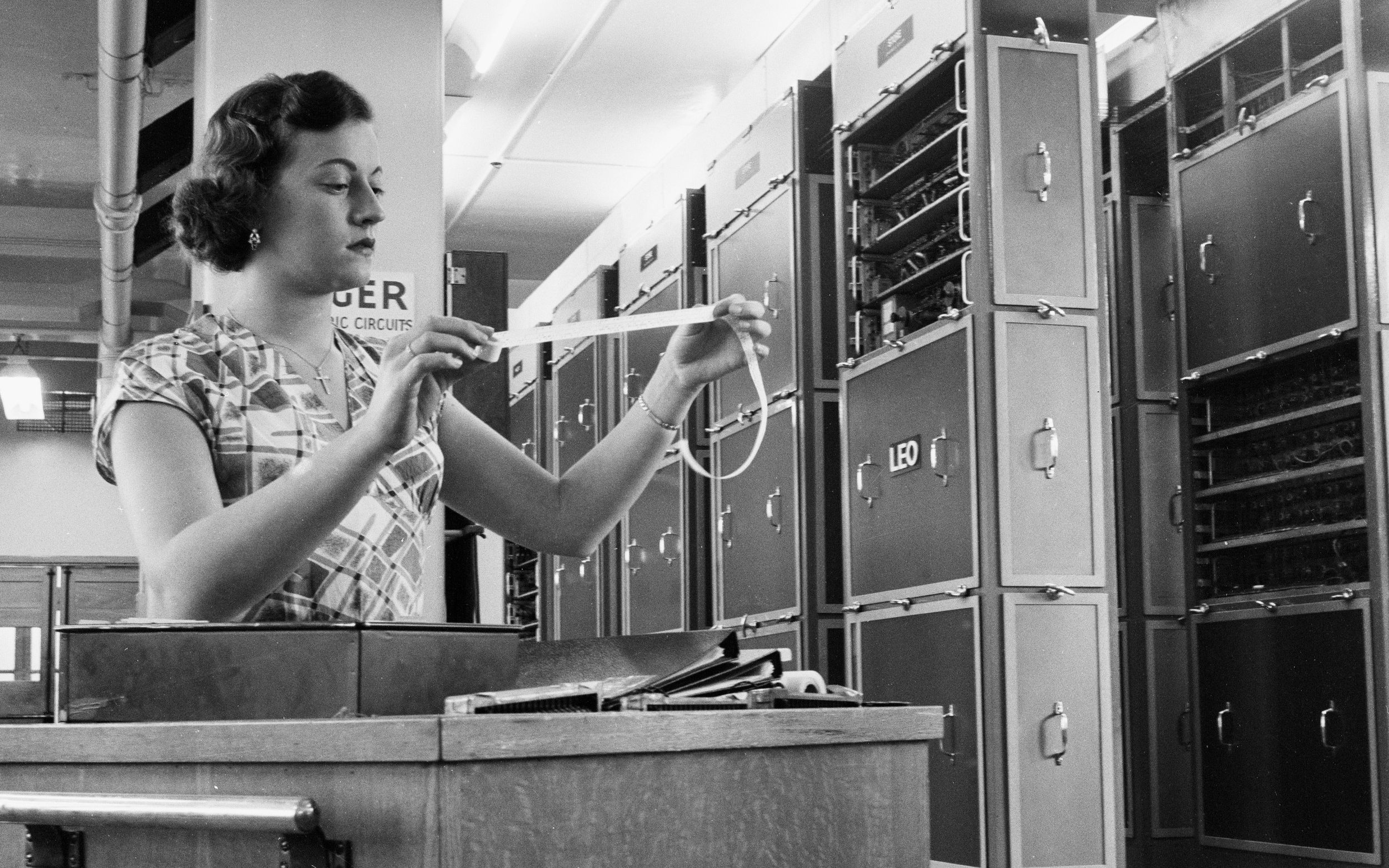
An operator at work using the electronic computer in Cadby Hall, Kensington in 1955 - Mirrorpix
One of its earliest programmers and a true pioneer of information technology was Frank Land, later joined at Lyons by his identical twin brother Ralph. They were born in Berlin in 1928, and came to the UK as part of the Kindertransport after their father’s motor accessory business had been expropriated by the Nazis, following Kristallnacht in November 1938. In fact, my mother’s antecedents had fled the same country, following anti-Jewish pogroms in the previous century, so it was fitting that these remarkable twins should have found their fulfilment within Lyons.
I had the great pleasure of sitting next to Frank at a lunch 10 years ago marking the 65th anniversary of the first operational run of LEO. He told me how they licensed LEO, to, among others, De Havilland, when it was working on the (eventually abandoned) British independent nuclear deterrent, Blue Streak. Obviously, LEO could not move, so the ballistics boffins came in to Lyons’ HQ (Cadby Hall). As Frank Land recalled at our lunch conversation: “LEO was completely roped off, we couldn’t go near it. We would just peek in.”
There were two later iterations, LEO 2 and LEO 3. Remarkably, the British Government allowed the tiny LEO sales force to seek business behind the Iron Curtain, which was masterminded by Ralph Land. I had a separate lunch with Ralph, when he regaled me with stories of that venture: “We even sold LEO to the Soviet High Energy Physics Institute in Moscow. MI6 kept an eye on it all. We had to modify it according to their instructions and also send the logs of all its work in Moscow back to them.”
Alas, both Frank and Ralph Land died this year, before the 75th anniversary events. For any readers who want to learn more about LEO, those include a programme of talks by experts on Sunday, November 29 at Bletchley Park’s National Museum of Computing.
And what happened to LEO? Lyons, which always saw the electronic brain as essential only for its own needs, didn’t put much muscle behind the venture: apparently the sales force was never more than six, hardly a match for the thousands IBM later put into the field. LEO was sold to English Electric in 1967, which folded into ICL, which in turn was swallowed up by Fujitsu (now of Post Office notoriety).
However, the visionary who perceived how such a system would become an all-purpose autonomous administrator left behind not just a legacy, but words which seem especially prescient in the century of artificial intelligence. In his handwritten notebook, in 1950, John Simmons inscribed: “I think we may be on the threshold of important events. We are… confronted with the inconceivable possibilities introduced by LEO, which may, if we dare to venture, lead us – God knows where.”
Source: “AOL Money”
